
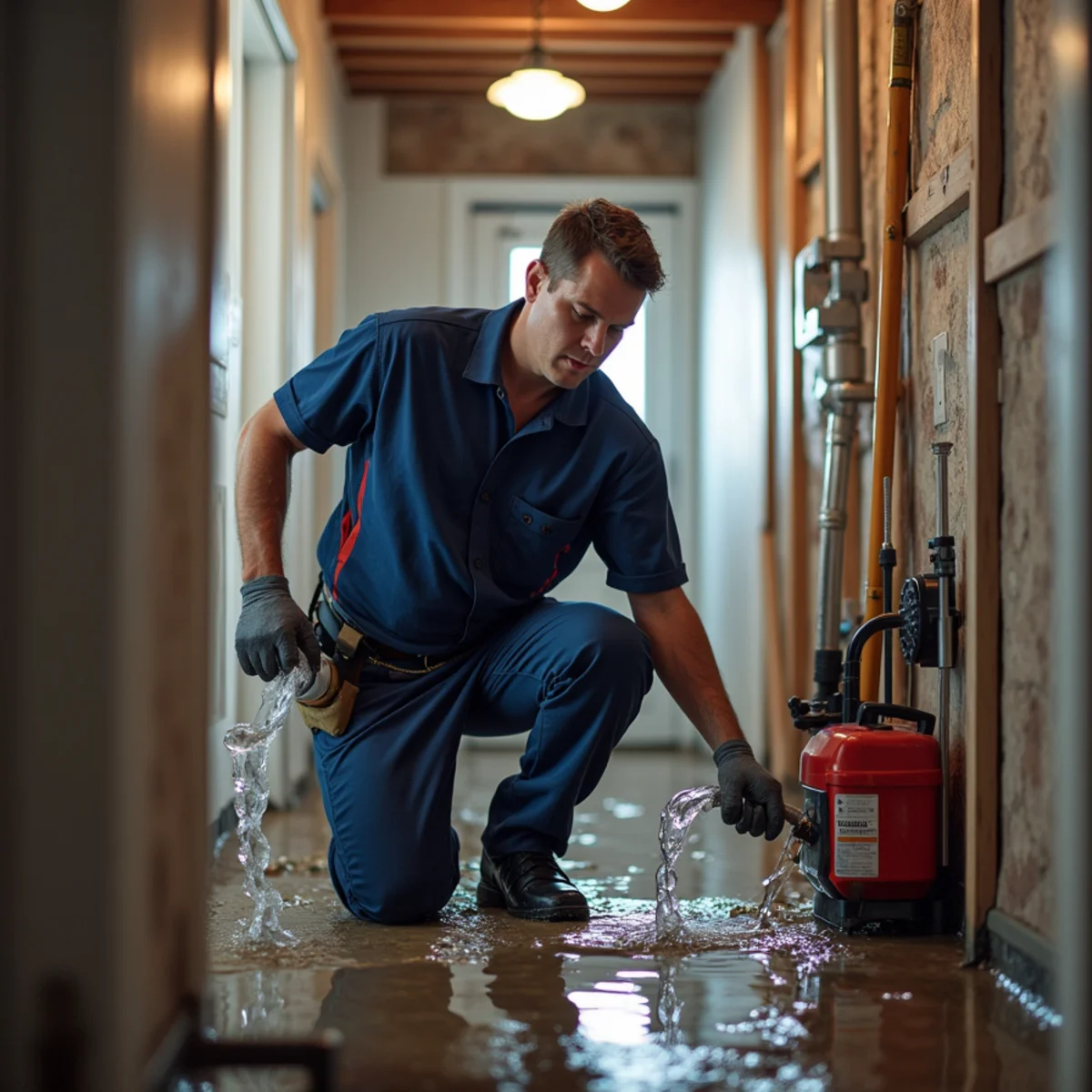
When water is standing in your home, two clocks start at once: the damage clock and the mold clock. The CDC recommends drying flood-wet materials within 24 to 48 hours to limit mold growth, so the response has to be fast and it has to be in the right order — stop the water first, then remove it, then dry.
As plumbers, our first and most important job is stopping the source: the burst pipe, the failed water heater, the backed-up line, the leak feeding the flood. Water cleanup that starts before the source is stopped is just bailing. Once the source is controlled, we extract standing water and coordinate with restoration professionals for proper drying, so plumbing repair and restoration stay as clean, documented, separate scopes for your records and any insurance claim.
Signs You Need This Service
- Standing water in a basement, utility room, or living space
- A burst pipe, failed water heater, or appliance line that has flooded an area
- A sump pump that failed during a storm
- Water spreading toward stored belongings or electrical equipment
- A sewer backup contaminating a lower level
- Wet drywall, flooring, or subfloor after a leak
What Emergency Water Cleanup With Us Includes
Every emergency water cleanup job is different, but here is what you can expect a Hydrosphere Corp visit to cover:
- Stopping the plumbing source first — the step cleanup can't skip
- Hazard control and keeping people away from contaminated or energized water
- Extraction of standing water from the affected area
- Coordination of professional drying within the CDC's 24–48 hour window
- Plumbing repair and restoration kept as separate, documented scopes
- A handoff of moisture readings and drying documentation for your records
- The source-repair invoice and photos your insurance claim will need
The 24–48 hour rule
Mold needs moisture and time. The CDC’s guidance to dry flood-wet materials within 24 to 48 hours exists because that window is when you can still prevent a mold problem on top of a water problem. Fast, correctly ordered response — source, safety, extraction, drying — is what keeps a bad day from becoming a much worse month.
Plumbing repair vs. restoration — why we keep them separate
These are two different jobs, and mixing them costs you. A plumber diagnoses and repairs the water source. Restoration professionals handle extraction, structural drying, demolition, and reconstruction. We coordinate the handoff and keep the paperwork separate — plumbing diagnosis and repair on one scope, drying and restoration on another — which is exactly what an insurance adjuster needs to see. Documentation and photos do not guarantee coverage, but clean, separated records give your claim its best footing.
Clean, gray, and black water — why the category matters
Not all water damage is equal. Clean water from a supply line is one situation; gray water from an appliance is another; black water from a sewer backup is a genuine health hazard that has to be handled with protection and proper disposal.
Identifying the category up front drives everything — what can be dried and saved, what has to be removed, and how the restoration is documented. We diagnose and stop the source, extract the water, and coordinate drying that follows recognized IICRC practices, keeping the plumbing and restoration records separate for your claim.
Stopping the source, then the water
Cleanup that starts before the source is stopped is just bailing. As emergency plumbers, we stop the plumbing failure first, then extract and dry. Where a failed sump pump or a burst pipe caused the flood, we fix that too — kept as a separate, documented scope.
We respond to flooding across the south shore in Freeport and Massapequa, coordinating drying within the CDC's 24–48 hour window.
Our Process
- 1
Stop the source
We find and stop the plumbing failure feeding the water — the essential first step cleanup cannot skip.
- 2
Make it safe
We keep people away from contaminated or energized water and address hazards before extraction begins.
- 3
Extract and coordinate drying
We remove standing water and coordinate restoration pros for professional drying within the mold window.
- 4
Document for your claim
We keep the plumbing repair and restoration as separate, documented scopes — source diagnosis, repair, photos, and test results.
What Affects the Price
We don’t post flat prices, because an honest number depends on your specific situation. For non-emergency work you’ll always get a written scope before we begin. The main factors:
- Volume of water and the affected area
- Whether the water is clean, gray, or sewage-contaminated
- The plumbing repair required to stop the source
- Extent of extraction and the scope of drying coordination
- Whether restoration (demolition, reconstruction) is a separate scope
- After-hours emergency timing
Why Choose Hydrosphere Corp for Emergency Water Cleanup
You have plenty of plumbers to call on Long Island. Here is what sets our emergency water cleanup apart:
Licensed & insured
A licensed plumbing and heating company — permits pulled and inspections handled where the work requires them.
4.9★ from 20 reviews
Serving Long Island since 2019, with a track record Long Island homeowners have reviewed and referred.
Written scopes, honest options
Repair-versus-replace explained in plain English, with the price in writing before non-emergency work begins.
24/7 emergency response
When this problem can’t wait, we answer — containment first, then a lasting fix.
Emergency Water Cleanup Across Long Island
We provide emergency water cleanup throughout Huntington and the surrounding towns — from Huntington and Huntington Station to Northport, Commack, Dix Hills, and Melville — and across Suffolk County and eastern Nassau County. Response time depends on crew location, traffic, and the job, and we’ll give you a realistic window when you call. See every community we serve or call (831) 290-4327 to confirm coverage for your address.
Frequently Asked Questions
Related Reading
Basement Flooding: First Steps Before the Plumber Arrives
A flooded basement is dangerous as well as damaging. Here is how to stay safe, limit the damage, and get ahead of mold before help arrives.
Local angleWhy Long Island Basements Flood (and How to Stop It)
Long Island basements flood for reasons that are largely predictable — and largely preventable. Here is why it happens and what actually stops it.